Buying Opal Online? 8 Things to Know First
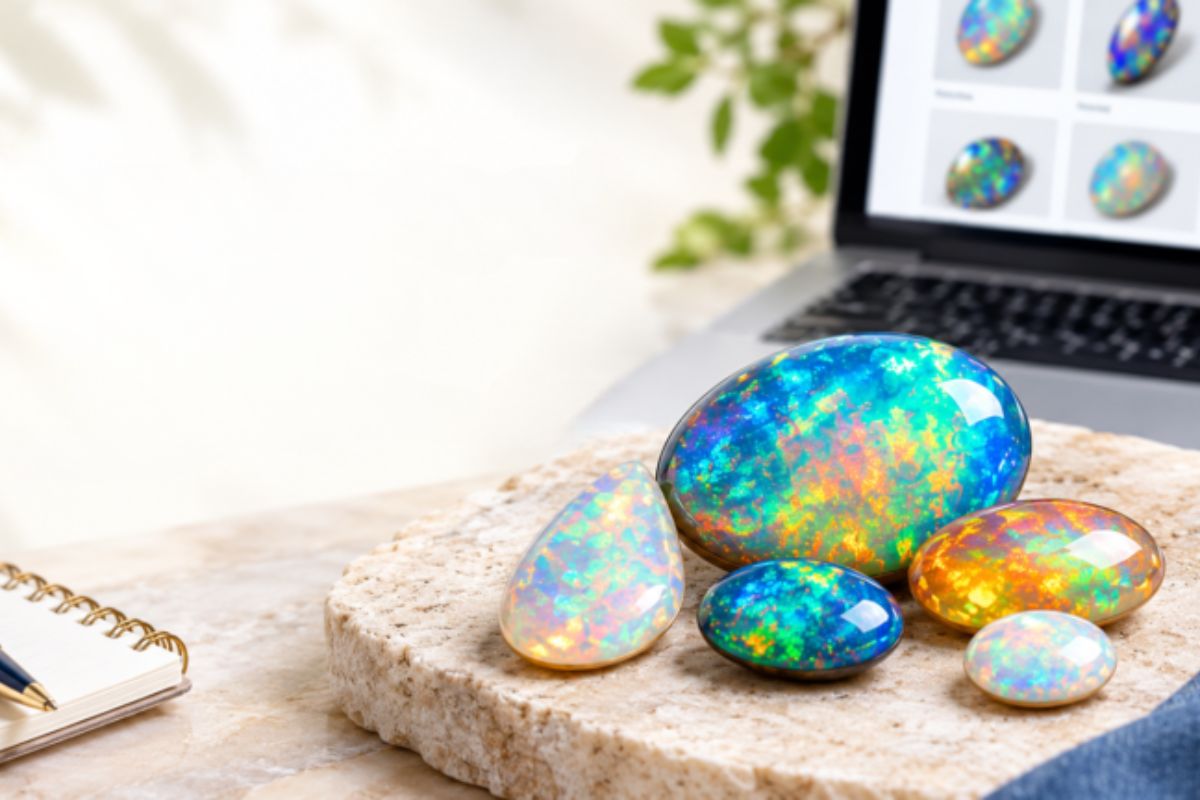
Browsing opal gemstones online is easy, but buying one takes a little homework. Each opal type has its own charm and uniqueness, demanding diligent consideration and a learned perspective. The dancing play-of-color of a natural opal is not the only factor that requires a little extra attention; there are also other essential opal quality factors that need to be judged whether you buy online or offline: body tone, transparency, clarity, cut, and treatments.
Whether you want an opal for an engagement gift, for astrological purposes, custom jewelry design, or just to upgrade your collection, this guide explains 8 things to know before buying opal. So, if you are new to the gemstone world, stick to this guide until the end to avoid expensive mistakes.
What to Look for When Buying Opal
To make the opal online buying journey more exciting and less stressful, understanding the basics is key. Reading this opal buying guide will give you some important insights that you need to deal with and help you decide on the right opal for you.
- Know What Type of Opal You Are Buying: Opals come in a wide variety, and each one should not be treated the same. Knowing the type matters, because each variety has different visual characteristics and is evaluated somewhat differently.
-
- Black Opal: Has a dark body color that can provide strong contrast with play-of-color. It is positioned at the top of the opal price list.
- White Opal: Has a milky or light gray background with varying degrees of play-of-color. Highly Collectible and more affordable variety.
- Crystal Opal: Has a transparent to translucent body that can allow color to appear within the stone. It is the brightest and liveliest variety of opal.
- Boulder Opal: It is the precious opal occurring with its natural host rock or ironstone matrix.
- Fire Opal: A transparent to translucent gem known for its vibrant, warm body colors of bright yellow, orange, and fiery red. It may or may not show play-of-color.
- Common Opal: It does not display the characteristic play-of-color of precious opal.
Before Buying: Make sure the online listing clearly mentions the specific opal type instead of simply calling the stone “opal.”
- Know the Construction (Solid vs. Assembled Opals): Also the most important thing to check before reviewing color or price. A buyer must need to know whether the gem is a 100% natural solid stone or an assembled one.
- Solid Opal: natural opal material throughout the stone. Offers high value and durability.
- Doublet: thin opal layer attached to a dark backing. Its dark base enhances the play-of-color to the max.
- Triplet: thin opal layer with backing and transparent top.
Before Buying: Doublets and triplets are not fake stones; in fact, they are the best budget-friendly alternatives for attractive jewelry designs. Just check that the seller clearly states whether the stone is a solid, doublet, or triplet.
- Judge Play-of-Color and Rarity: For many precious opals, the most important quality factor is the play-of-color. It is the internal flash of rainbow hues that appears as you move the stone under light. When shopping online, examine:
- Color Hierarchy: red is the rarest and most expensive hue. Orange and yellow are secondary in rarity. And green and blue are the most common color spectrum.
- Pattern: Pinfire patterns are attractive but usually less valuable than large color blocks, such as Harlequin and broad flash patterns.
- Dead Spots: These are the areas where no play-of-color is showing. They can lower the market value of the stone.
- Movement: The color should shift and be visible from multiple angles as the stone tilts, not flash from one angle only.
Before Buying: Look for the stones rated bright 3 out of 5 to brilliant/sublime 5 out of 5 on the opal brightness scale.
- Pay Attention to Origin: where the opal was mined heavily influences its care requirements and market value.
- Australia: Australian opals are typically the best and the most expensive, mined in regions like Lightning Ridge, Coober Pedy, and Mintabie. These opals are highly stable and highly resistant to moisture changes.
- Other notable origins: Ethiopia is famous for affordable Welo crystal opals, while Mexico is famous for vibrant fire opals.
Before buying: make sure the seller provides guarantees for authenticity, ethical sourcing, and traceable provenance.
- Real vs. Fake (Synthetic) vs. Imitation: Laboratory made or fake opals are now very common in online marketplace. Sometimes, even experienced buyers also end up falling for them. So, how can you spot the difference online? Here are real vs fake opal visual difference signs you should know:
- Natural Opal: Earth-mined and completely natural, formed over millions of years. Usually shows irregular, unique patterns and colors and carries natural inclusions.
- Synthetic Opal: Made with human touch in labs with silica and similar composition. Generally shows repeating “lizard skin” or “chicken wire” patterns.
- Imitation Opal: Made from glass, resin, or plastic. They are overly glossy, uniform, and chemically unrelated to real opal.
Before Buying: It’s very hard to inspect the genuineness of the stone online, so ask for reputable gemological lab certificate from the seller that identifies whether the stone is natural, lab-grown, or fake.
- Beware of Camera Tricks and Digital Enhancements: Opals are incredibly hard to click accurately because their appearance changes based on light angles and movement. Static images alone rarely capture how a stone performs in real life. Crooked sellers often listed stones with using manipulated lighting, dark backgrounds, or boosted saturation to make dull opals look brilliant.
Before Buying: always ask for 360 degree video taken under natural daylight.
- How to Buy Opal Online: along with honest sellers, the online marketplace consists some fraudulent sellers also that listed stones that may look beautiful online but when you see physically, gets disappointed. So, always consider to check:
- Undisclosed Information: Treatment is common and widely accepted for gemstones now. The issue is when the seller sell with not disclosing that it is the treated stone and charge expensive price by calling it natural.
- Trusted Seller: Always look for the seller who deals in authentic gemstones for sale, listed gem videos with multiple images, mention all the stone information clearly, and provides good return window to buyers.
- Certification: Never forget to ask stone authenticity certificate from the seller if you purchase high-value stone like black opal. You can also ask for reputable gemological lab certifiate.
Before Buying: Don’t hurry yourself into selecting the seller, always check individual reviews and industry memberships. A secure website, clear product details, and easy-to-find contact information are good signs.
- Understand Opal Price per Carat: At last, always compare the opal price right away because opal price ranges vary by source, type, brilliance, and play-of-color effect. It can cost anywhere from $10 to over $20,000 per carat. So, to avoid getting ripped off, never compare a boulder opal to fire opal, or a doublet to a solid.
Before Buying: Each opal type priced accordingly. So, if you see a black opal listed online at very low price, could be a composite or treated. So, educate yourself with the current opal price per carat before browsing.

Leave a Reply
You must be logged in to post a comment.