The Pearl Buying Guide: How to Choose the Right Pearl for Your Jewelry
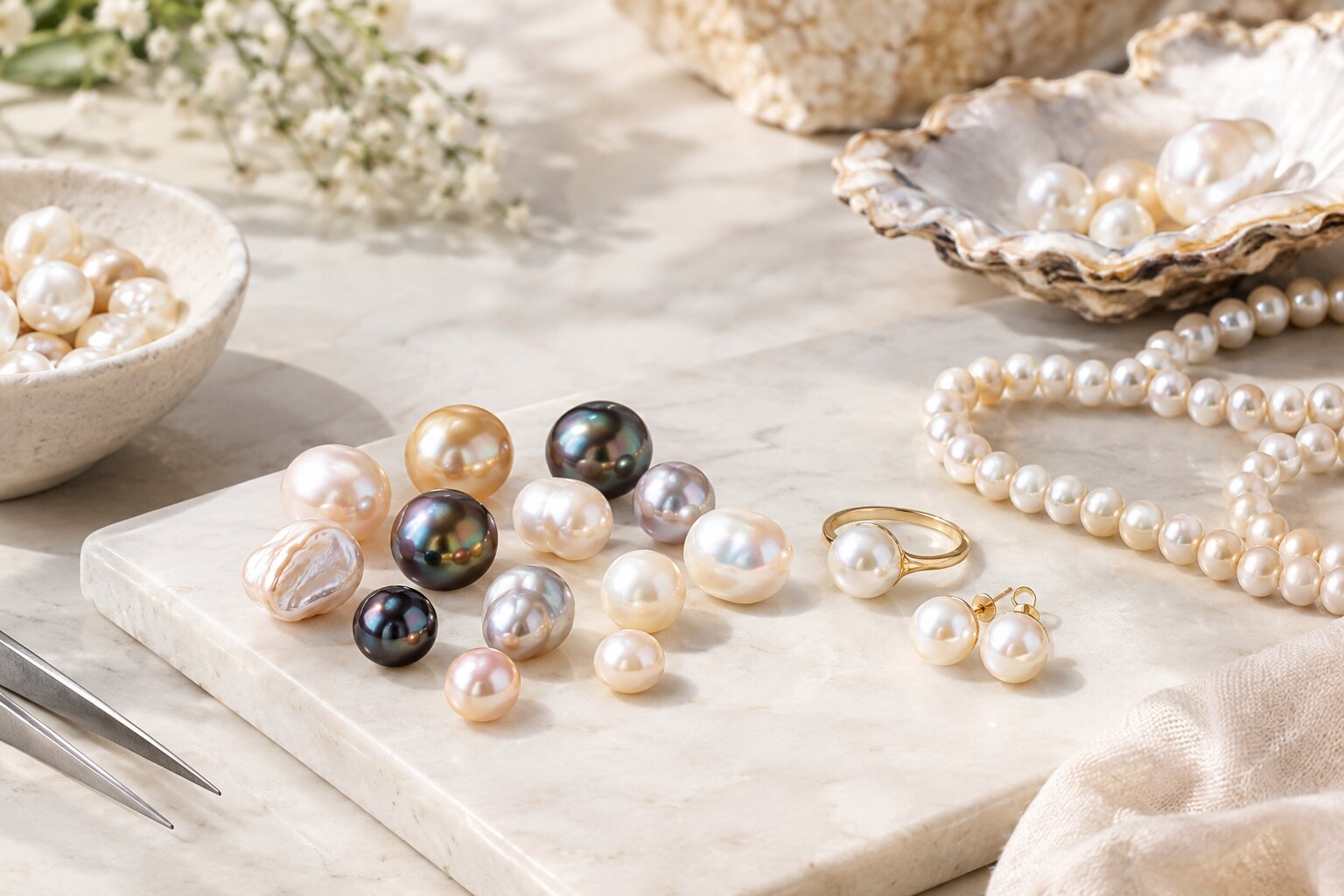
Pearls, when added to any jewelry, not only level up the centerpiece stone’s beauty but also enhance the overall appearance of the piece. Pearl jewelry brings timeless elegance and a classic appearance. Unlike traditional gemstones like rubies, diamonds, and more, which are formed under Earth’s pressure, pearls are nature’s premier organic gemstones created inside a living creature called a mollusk.
Today, pearls are becoming the classic choice not just for special occasions, but for everyday statement designs, fashion-forward flair, and every kind of moment. So, whether you’re a designer, a jewelry maker, or a buyer who has finally decided to buy pearls for jewelry but doesn’t know how to decode the right one, you are in the right place.
This practical pearl buying guide will cover all the information you should know so that you can overcome all the hardships with absolute confidence.
How Pearls Are Formed
When choosing pearls for jewelry, decoding how they’re formed helps you understand what you are actually buying. Here are the main pearl origins:
- Natural Pearls: They have purely formed by chance in a mollusk without any human help. Extremely rare and command very high prices.
- Cultured Pearls: They are also grown inside the mollusk (like farmed oysters or mussels), but with human help by placing a small bead or tissue piece inside them to start nacre (pearl-layer) growth. They are also 100% genuine and authentic pearls.
- Imitation Pearls: They are totally man-made from glass, plastic, or coated balls to mimic the real ones. They are not genuine pearls and are available at very low prices.
Discover the Types of Pearls
There are four major cultured pearl types. Each comes from a different mollusk and growing environment. This is why each pearl family carries a distinct personality, price tag, and ideal use case.
Freshwater: Mainly produced in China.
- Natural Body Colors: White, pink, peach, lavender.
- Luster: soft to high
- Common Sizes: 2mm to 12mm+
- Best Suited For: Durable daily wear and budget-friendly wire-wrapping pieces.
- Price: $50 to $3,000+ per strand or piece
Akoya: Also known as saltwater pearls, mainly produced in Japan and China. They hold a premium, classic, or mirror-like shine that elevates all designs.
- Natural Body Colors: White, cream, pink, or rare blue.
- Luster: High, mirror-like.
- Common Sizes: 2mm to 10mm+
- Best Suited For: Ideal for bridal sets and a classic chokers.
- Price: Ranges from $300 to $10,000+ per strand or piece.
- Tahitian: They are grown in black-lipped oysters and often called black pearls, but are not truly black. They mainly come from French Polynesia.
- Natural Body Colors: Features dark, exotic colors like black, gray, green, peacock, and aubergine.
- Luster: Satin to high.
- Common Sizes: 8mm to 16mm
- Best Suited For: Statement jewelry and men’s designs.
- Price: Ranges from $500 to $25,000+ per strand or piece.
- South Sea: They grow in the large Pinctada maxima oyster, which is why they reach large sizes with thick nacre. They come from the deep oceans of Australia, Indonesia, and the Philippines.
- Natural Body Colors: Honey gold, silky white, and champagne.
- Luster: Soft, satiny glow.
- Common Sizes: 8mm to 20mm
- Best Suited For: Big focal point designs and individual pendants.
- Price: Ranges from $1,000 to $100,000+ per strand or piece.
The Key Value Factors of Pearls
Before investing, grade the gem yourself by understanding these 6 core pillars of pearl quality:
- Luster: Refers to the intensity and sharpness of light reflecting off the pearl’s surface. High-luster pearls produce sharp, bright, mirror-like reflections and a sense of depth below the surface.
- Surface Quality: While minor surface irregularities (like tiny pits, bumps, or wrinkles) are normal, the cleaner and smoother the surface, the higher the value. In the top-grade pearls, blemishes are virtually invisible to the naked eye.
- Shape: Pearls with a perfectly rounded shape are very rare and most valuable, while oval, drop, button, and irregular baroque shapes offer very unique characters.
- Sizes: Larger pearls are rarer and more expensive.
- Color and Overtone: Pearl color consists of a body color like white, black, or gold, and an overtone, which is a secondary translucent tint like rose, green, or silver that is visible as light moves across its surface.
- Matching: When grouping pearls with multiple beads for a strand or earring pair, consistent luster, size, progression, and overtone harmony make or break the finished look.
Summary Recommendations
When buying pearls for jewelry making, remember:
- Best Everyday Value: High-grade freshwater pearls (AAA grade).
- Best Timeless Luxury: Hanadama or AAA Akoya pearls.
- Best Modern Statement: Tahitian or Golden South Sea pearls.
- Best for Creative Crafts: Baroque freshwater pearls.
A quick buy natural pearl Tip: Pick your pearl type first, judge the luster and nacre second, then match shape and drilling to the design. Almost 95% of pearls sold today are cultured and are also real.
Explore our collection of cultured or natural pearls for sale and find pearls suited to your jewelry design.

Leave a Reply
You must be logged in to post a comment.