Long-Span Transmission Upgrades Using Lightweight, High-Strength Conductors
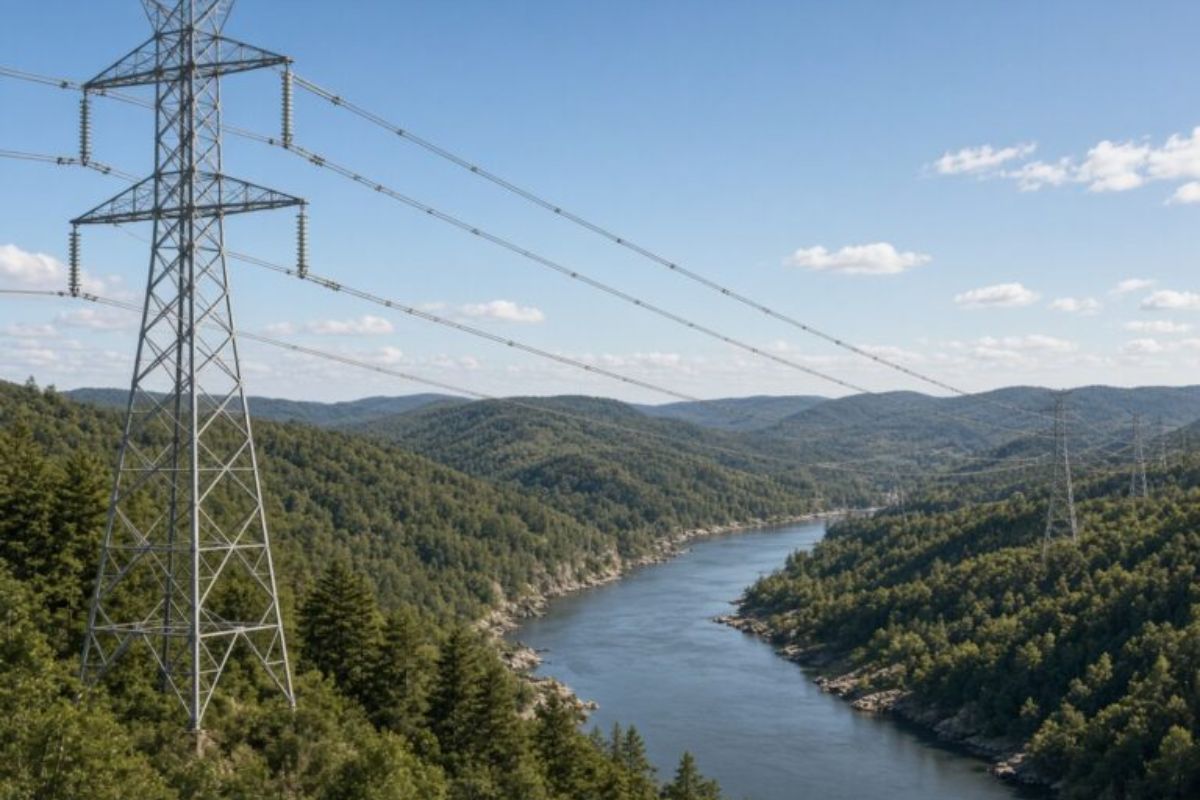
Utilities facing rising demand and aging infrastructure often confront a familiar problem on long-span lines. Existing ACSR conductors reach thermal limits well before the supporting structures do, yet replacing those structures triggers years of permitting, environmental review, and capital outlays that many transmission owners cannot absorb. The result is grid congestion, constrained transfer capability, and delayed interconnection of new generation.
The Practical Constraints of Long-Span Reconductoring
Long spans amplify the usual trade-offs. Higher operating temperatures increase sag, which reduces ground clearance and forces either reduced ratings or structural modifications. Traditional approaches, such as installing larger ACSR or switching to ACSS, frequently require tower reinforcement or complete rebuilds because the additional conductor weight and tension exceed original design margins.
In mountainous or river-crossing terrain, where spans already push structural limits, these modifications become especially costly and time-consuming. Permitting adds another layer. Any change that alters tower height, foundation loads, or right-of-way requirements can reopen environmental assessments and stakeholder consultations. Project schedules stretch from months into years, while load growth continues.
How Conductor Design Changes the Equation
Lightweight, high-strength conductors address the problem at the source. By replacing the steel core with a high-modulus composite core and encapsulating it in aluminum, these designs deliver higher ampacity at lower weight and reduced thermal expansion. The lower coefficient of thermal expansion keeps sag within acceptable limits even at elevated continuous operating temperatures. As a result, many existing towers can remain in place without reinforcement.
Because the outer aluminum strands and overall diameter closely match conventional ACSR or ACSS, installation and maintenance practices stay familiar. Crews use standard stringing equipment, tensioning methods, and hardware. No specialized training or tooling is required, which shortens mobilization time and reduces the risk of installation errors on long spans.
Independent testing by organizations such as EPRI has confirmed the mechanical and electrical performance of these designs under sustained high-temperature operation, aeolian vibration, and ice loading. Field experience across thousands of miles shows that the combination of higher capacity and reduced sag allows utilities to achieve 2–3 times the original line rating in many cases while preserving structural margins.
Project Outcomes That Matter to Planners
When transmission planners evaluate upgrade options, three factors consistently drive decisions: capacity gain, capital cost, and schedule risk. Lightweight high-strength conductors improve all three. Capacity increases without the need for new towers in a substantial share of projects. Capital expenditures drop because foundation work, tower replacement, and extended outages are avoided.
Schedules compress because the work remains within the scope of a conventional reconductor rather than a rebuild. For long-span corridors that serve as critical transfer paths, this approach also improves reliability. Lower line losses and the ability to operate at higher continuous ratings give operators more flexibility during contingencies and peak load periods.
Utilities evaluating transmission line reconductoring solutions now have a practical path that fits existing work practices while delivering the performance needed for grid modernization. The technology does not eliminate every constraint, but it removes several of the most expensive and time-consuming ones that have historically slowed long-span upgrades.

Leave a Reply
You must be logged in to post a comment.