KP AUTOMATIONS Automatic Pasta Machine – Connecting Production, Drying and Packing for Efficient Manufacturing
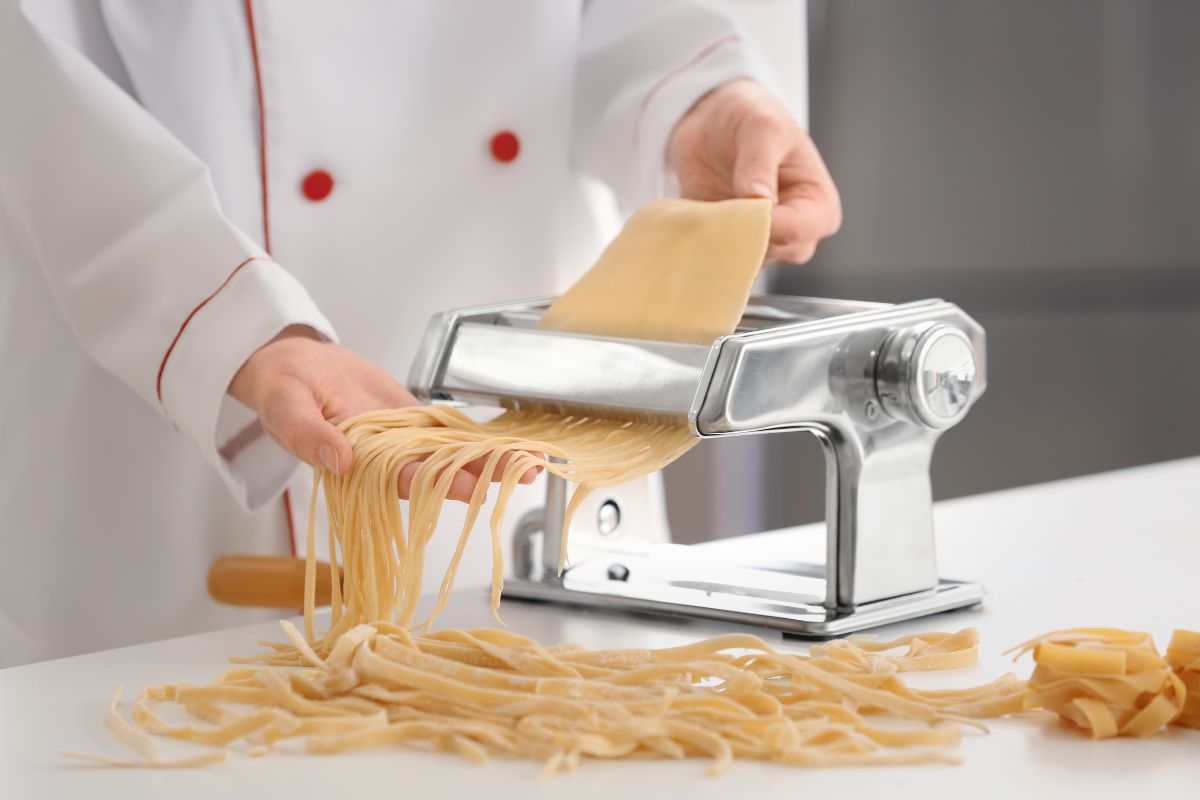
A modern pasta factory is not built around an extruder alone. An efficient production operation depends on how the automatic pasta machine, drying system, product handling, and packaging equipment work together.
When production moves from small-batch manufacturing toward continuous commercial output, each stage must be capable of supporting the next. Pasta coming out of the extrusion section must be dried correctly, cooled and handled properly, and then transferred to packaging without creating unnecessary delays or quality variations.
This is why manufacturers planning a commercial pasta facility increasingly look at the complete production flow rather than selecting individual machines in isolation.
KP AUTOMATIONS develops pasta processing, drying, automation, and packaging solutions for commercial and industrial applications. Its machinery portfolio includes automatic pasta machines, continuous drying systems, pasta packing equipment, and complete production-line solutions. The company states that it has been manufacturing pasta machinery since 1998 and has installed more than 4,000 pasta machines worldwide.
What Does an Automatic Pasta Machine Do?
An automatic pasta machine is designed to automate important stages of pasta production with limited manual intervention.
Depending on the production configuration, the process can include:
- Dough preparation
- Mixing and kneading
- Vacuum processing
- Extrusion
- Pasta shaping
- Cutting
- Pre-drying
- Drying
- Cooling
- Product transfer
- Packaging
KP AUTOMATIONS describes its automatic pasta machinery as systems that can automate processes including dough mixing, extrusion, cutting, drying, and packing.
The main benefit of automation is process consistency. Instead of relying heavily on manual handling between individual stages, production parameters can be controlled through an integrated system.
For commercial manufacturers, this can make production easier to organize while supporting consistent output.
Why Production Flow Matters
Imagine a factory with a high-output extrusion machine but insufficient drying capacity.
The extruder may be capable of producing large quantities of pasta, but the overall factory cannot operate at that rate if wet pasta begins accumulating before the dryer.
The same problem can occur at the packaging stage. If dried pasta is produced faster than it can be weighed and packed, packaging becomes the bottleneck.
A more effective approach is to consider the production chain as a connected system:
Raw Materials → Dough Preparation → Extrusion → Shaping → Drying → Cooling → Handling → Packing
Every stage should be considered according to its required capacity, product format, operating conditions, and future expansion plans.
KP AUTOMATIONS offers short-cut pasta production systems ranging from 50 kg/hr to 5,000 kg/hr, with PLC control and configurations for different pasta shapes and production requirements.
From Extrusion to Drying
Extrusion creates the required pasta shape, but drying determines whether the product can achieve the desired stability for storage and distribution.
Freshly extruded pasta contains significant moisture and therefore requires controlled drying before it can become a stable dried product.
An appropriate pasta dryer needs to manage factors such as:
- Temperature
- Humidity
- Air circulation
- Drying time
- Product movement
- Moisture removal
Poorly controlled drying can create problems such as excessive surface hardening, cracking, or inconsistent moisture levels.
KP AUTOMATIONS’ drying systems are designed around controlled temperature, humidity, and airflow for commercial pasta production.
Why a Pasta Continuous Dryer Is Important
For larger production lines, batch drying can become difficult to coordinate with continuous extrusion.
This is where a pasta continuous dryer becomes valuable.
A continuous dryer allows pasta to move progressively through controlled drying zones rather than depending entirely on separate batches.
KP AUTOMATIONS’ continuous dryer uses a multi-tier conveyor system in which pasta moves through controlled temperature and humidity zones. The system incorporates PLC-based controls and recipe management and is designed for both short-cut and long-cut pasta.
The continuous design can support a more organized production flow:
Extrusion → Pre-Drying → Controlled Drying → Cooling → Packing
Instead of treating drying as a separate operation, it becomes an integrated part of the production line.
How a Pasta Conveyor Dryer Works
A pasta conveyor dryer moves pasta through different controlled drying areas using a conveyor arrangement.
The objective is to expose the product to appropriate drying conditions progressively.
A typical industrial drying process can involve:
1. Product Entry
Freshly formed pasta enters the drying section after extrusion and preliminary handling.
2. Initial Moisture Removal
The early drying stages begin removing surface moisture under controlled conditions.
3. Progressive Drying
The pasta moves through additional zones where temperature, humidity, and airflow are managed according to the production recipe.
4. Moisture Stabilization
The later stages help bring the product toward its required final moisture condition.
5. Cooling and Transfer
After drying, pasta can be cooled and transferred toward the packaging section.
KP AUTOMATIONS describes its conveyor drying systems as suitable for spaghetti, fettuccine, and other long- and short-cut pasta varieties, with controlled airflow and temperature distribution.
Automatic Pasta Dryer: What Should Manufacturers Look For?
An automatic pasta dryer should do more than simply apply heat.
Effective drying requires coordinated control of several variables.
1. Temperature Control
Temperature needs to be managed according to the pasta type and drying stage. KP AUTOMATIONS notes that gradual temperature increases in industrial drying can help prevent cracking or surface hardening.
2. Humidity Management
Humidity affects the rate at which moisture leaves the pasta. Excessively rapid moisture loss can affect product integrity.
3. Air Circulation
Uniform airflow helps ensure that pasta receives consistent drying conditions throughout the dryer.
4. Recipe Management
PLC-based systems can allow operators to manage and monitor drying recipes and operating conditions.
5. Energy Management
A well-designed dryer should distribute heat and airflow efficiently. KP AUTOMATIONS describes its continuous dryer as using modular drying zones and energy-efficient components intended to reduce unnecessary energy use.
Pasta Dryer Options for Different Production Requirements
Not every pasta manufacturer needs the same drying technology.
KP AUTOMATIONS offers different drying approaches, including room, static, and continuous drying systems.
1. Static Pasta Dryer
Static drying systems can be suitable where pasta is processed in controlled batches. KP AUTOMATIONS’ static dryer specifications list a production capacity of 500 kg/hr, with temperature, humidity, and airflow controls and programmable drying profiles.
2. Pasta Continuous Dryer
Continuous drying is designed for production environments where extrusion and downstream processing operate as a continuous flow.
This type of system can be particularly useful for larger commercial production lines.
3. Room Dryer
A room-based approach provides controlled environmental conditions for batch processing and can be used for applications where continuous drying is not the primary requirement.
The appropriate choice depends on production capacity, pasta format, factory layout, automation requirements, and the desired production workflow.
Connecting Drying With Pasta Packing
Once pasta has been dried and cooled, it needs to reach the packaging section efficiently.
This is where the pasta packing machine becomes an important part of the overall production system.
A commercial packing system can automate:
- Product weighing
- Filling
- Pouch formation
- Sealing
- Packaging-size adjustments
- Product handling
KP AUTOMATIONS offers automated packaging solutions including Vertical Form Fill Seal (VFFS), weighing and filling systems, vacuum packing, pillow and flow-wrap systems, and other packaging configurations.
For dry pasta products such as penne, macaroni, vermicelli, and spaghetti, VFFS equipment can form, fill, and seal pouches automatically.
Why Packaging Should Be Planned Early
Packaging is sometimes considered only after the processing equipment has been selected. This can create unnecessary production constraints.
For example, if an automatic pasta machine produces significantly more product than the packing machine can handle, finished pasta may accumulate between processing and packaging.
A better production-line design considers the entire output path.
Manufacturers should evaluate:
- Expected production volume
- Pack sizes
- Retail versus bulk packaging
- Weighing accuracy
- Pouch style
- Sealing requirements
- Product format
- Automation level
- Future packaging expansion
This helps create a more balanced manufacturing line.
Short-Cut and Long-Cut Pasta Require Different Considerations
The production line should also reflect the type of pasta being manufactured.
Short-cut pasta includes formats such as macaroni, penne, fusilli, and similar products. KP AUTOMATIONS’ short-cut lines are designed around modular production and can manufacture different shapes and thicknesses using appropriate equipment and dies.
Long-cut pasta, such as spaghetti and fettuccine, requires a different handling and drying arrangement.
KP AUTOMATIONS’ long-cut production line includes pre-drying, a tunnel-style drying section, a shocking or cooling unit, and rear cutting before packaging.
This illustrates why choosing an automatic pasta machine should always begin with the products that the factory intends to manufacture.
Food-Grade Construction and Automation
Hygiene is another important consideration in commercial pasta production.
KP AUTOMATIONS states that its pasta machinery is constructed using food-grade stainless steel and incorporates automation and precision engineering for commercial and industrial production.
Food-processing equipment must also be designed with practical cleaning and maintenance requirements in mind.
Automation can further reduce unnecessary manual handling between processing stages, supporting a cleaner and more controlled production environment.
PLC Control Across the Production Process
Automation becomes especially useful when several machines operate together.
A PLC-based control system can help coordinate operating parameters and production recipes.
In pasta production, control systems can support areas such as:
- Production sequencing
- Extrusion control
- Drying recipes
- Temperature monitoring
- Humidity management
- Conveyor operation
- Packaging coordination
- Operator monitoring
KP AUTOMATIONS specifies PLC control for its short-cut pasta production lines and PLC-based controls for its continuous pasta dryer.
The objective is to make the production system easier to monitor while reducing dependence on manual adjustments.
Choosing an Automatic Pasta Production System
Before investing in an automatic pasta machine, manufacturers should examine the entire production requirement.
Important questions include:
1. What pasta products will be manufactured?
The answer determines the extrusion equipment, dies, handling, drying, and cutting requirements.
2. What is the required production capacity?
The production target should account for present demand as well as realistic future requirements.
3. What type of drying system is appropriate?
A static system may suit batch production, while continuous drying can be more appropriate for continuous industrial lines.
4. How will the product be packed?
Pack sizes, packaging materials, weighing requirements, and pouch formats should be determined early.
5. How much automation is required?
Automation should be selected according to the production environment, staffing model, and desired level of process control.
6. How will the equipment be maintained?
Access to technical support, spare parts, maintenance information, and service assistance can be important for long-term operation.
Why Choose KP AUTOMATIONS?
KP AUTOMATIONS has operated in automation, packaging, food processing, and pasta machinery since its establishment in 1998. The company describes its offering as extending from fully automatic pasta making machines to complete pasta production and packing lines.
Its portfolio covers multiple parts of the production process, including pasta machines, long- and short-cut production lines, drying systems, dies, and packaging machinery.
This integrated approach allows manufacturers to consider processing, drying, and packaging together when developing a commercial pasta production facility.
Conclusion
An automatic pasta machine is most effective when it operates as part of a properly balanced production system.
Extrusion determines the pasta shape and production output. The pasta continuous dryer manages controlled moisture removal. An automatic pasta dryer can regulate drying conditions with greater consistency, while the pasta packing machine prepares the finished product for storage, distribution, and sale.
For commercial manufacturers, the key is to connect these stages into one efficient workflow rather than treating every machine as an independent purchase.
KP AUTOMATIONS provides machinery and production solutions covering pasta processing, drying, automation, and packaging, helping manufacturers plan production systems around their specific product and operational requirements.
Summary
Explore KP AUTOMATIONS automatic pasta machine, pasta continuous dryer, automatic pasta dryer and pasta packing machine for efficient commercial production.
Source
KP AUTOMATIONS

Leave a Reply
You must be logged in to post a comment.