Immersion Cooling Technologies for High-Density Data Centers
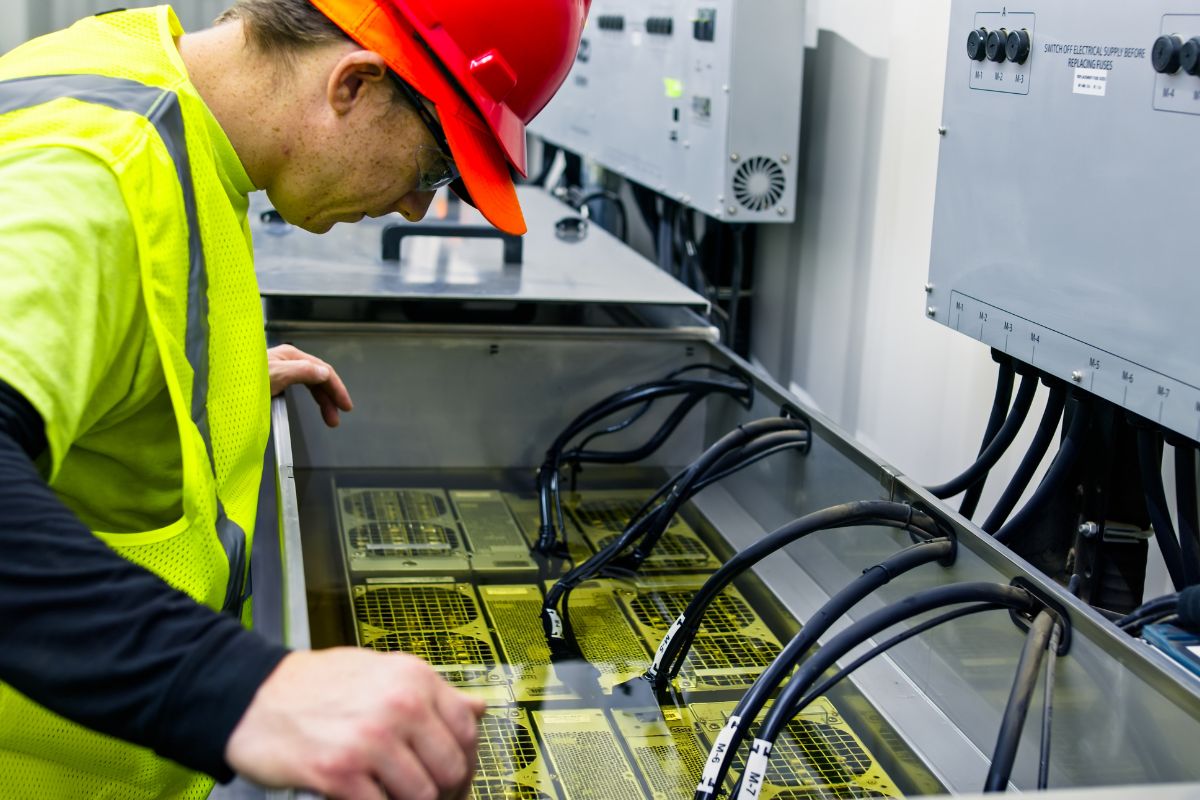
Modern high-performance computing has pushed thermal design power (TDP) beyond the physical limits of traditional air cooling. With modern GPU clusters and custom accelerators exceeding 700 to 1,000 watts per socket, moving heat away from the silicon requires higher thermal conductivity than air can offer. Immersion cooling, which places IT hardware in direct contact with a dielectric fluid, has moved from an experimental concept to an essential architecture for high-density facilities.
Single-Phase vs. Two-Phase Immersion
Immersion cooling systems fall into two primary categories, differentiated by how the dielectric fluid behaves during the thermal cycle.
1. Single-Phase Immersion
In a single-phase system, the fluid remains liquid throughout the entire operational loop. Specialized dielectric fluids, such as engineered synthetic hydrocarbons or fluorinated liquids, circulate across the heat-generating components. The warmed liquid is directed through a heat exchanger, cooled by a secondary water loop or dry cooler, and returned to the tank. Single-phase systems are mechanically straightforward, require low maintenance, and operate without internal pressure management.
2. Two-Phase Immersion
Two-phase cooling relies on low-boiling-point fluorochemical fluids, such as specialty perfluoropolyethers (PFPEs) or engineered hydrocarbons. When the fluid contacts hot components like the CPU or GPU die, it vaporizes, absorbing massive amounts of latent heat. The vapor rises to a condenser coil at the top of a sealed tank, transitions back into a liquid state, and drips back down. While two-phase systems deliver superior heat transfer coefficients, they demand strictly sealed enclosures to prevent vapor loss and fluid degradation.
Dielectric Fluid Selection and Compatibility
The fluid is the foundation of any immersion setup. Unlike water, dielectric liquids have high dielectric strength, meaning they do not conduct electricity. However, engineers must carefully evaluate chemical compatibility before deploying hardware into a bath.
Standard server components often contain plasticizers, elastomers, labels, and thermal pastes that leach into or dissolve inside dielectric fluids. When materials degrade, they foul filters, alter the dielectric breakdown voltage of the fluid, and degrade overall thermal performance. Choosing chemically inert fluids, like high-purity fluorinated fluids, paired with immersion-ready bare-metal hardware and specialized thermal interface materials (TIMs), ensures long-term operational reliability.
Efficiency, Density, and Facility Economics
Adopting immersion cooling shifts several core data center metrics:
- Power Usage Effectiveness (PUE): Immersion eliminates the need for chassis fans, heavy CRAC units, and complex airflow containment, often dropping facility PUE below 1.05.
- Rack Density: Air-cooled racks typically cap out around 30 to 40 kW. Immersion tanks routinely support 100 kW to over 250 kW per tank in a smaller footprint.
- Component Longevity: Submerged hardware avoids thermal cycling shocks, dust accumulation, hot spots, and oxidation, leading to lower failure rates over extended runtimes.
Practical Engineering Considerations
Transitioning to immersion cooling requires changes to facility infrastructure. Liquid tanks are substantially heavier than standard server racks, requiring evaluation of floor load ratings. Technicians also require overhead cranes or specialized hoists for maintenance, as well as clear fluid drainage and filtering protocols during hardware servicing.
For hyperscalers and enterprise facilities deploying dense AI clusters, immersion cooling provides a predictable, highly efficient thermal path that air simply cannot match.

Leave a Reply
You must be logged in to post a comment.