The Role of Advanced Thermal Management in Modern Semiconductor Manufacturing
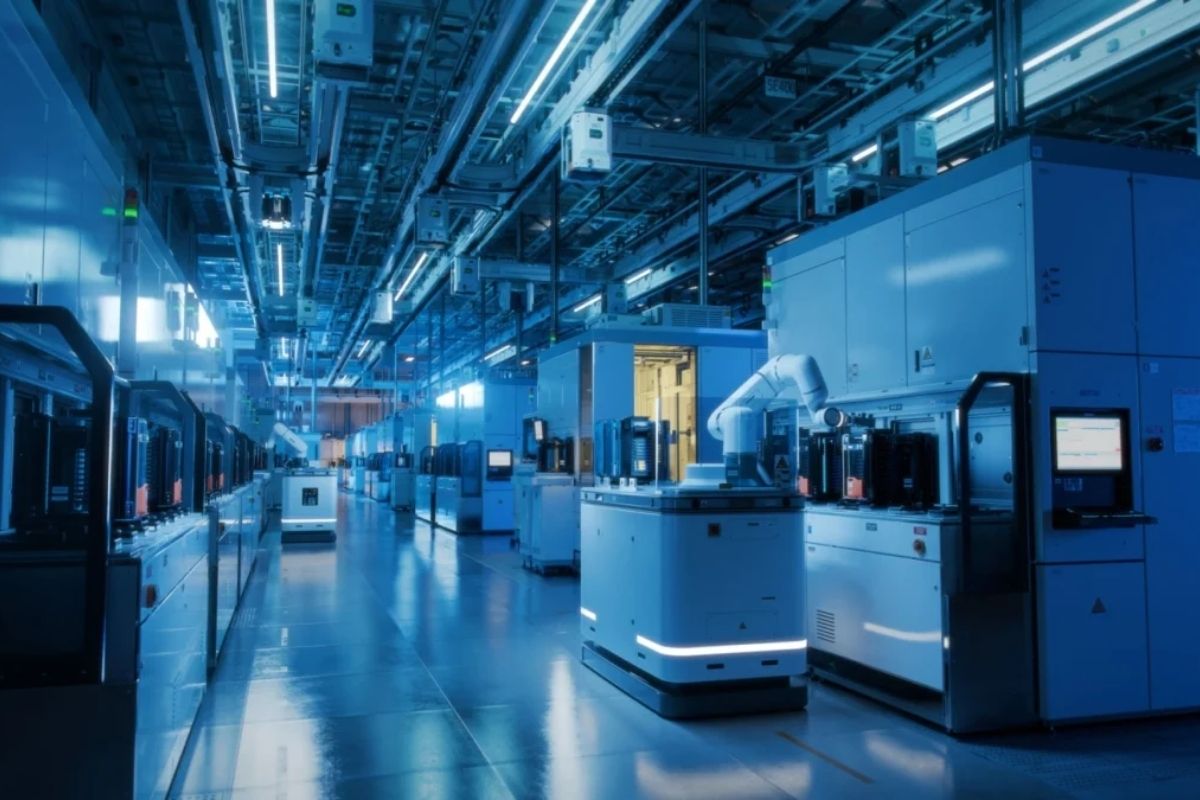
Semiconductor manufacturing operates at atomic scales where even minute temperature fluctuations disrupt process stability. As chip geometries shrink below 3nm and gate-all-around architectures become standard, maintaining uniform thermal conditions across the wafer during fabrication is critical to achieving acceptable yields.
Modern fabrication tools generate immense heat loads during processing. Thermal management solutions must do more than keep equipment cool, they must actively maintain tight temperature windows across rapid cycling phases.
Heat Challenges in Wafer Fabrication
Several key steps in fab operations place extreme demands on cooling infrastructure.
Plasma Etching and Deposition
During dry plasma etching and chemical vapor deposition, high energy ions continuously impact the wafer surface. Uncontrolled local heating causes photoresist degradation, non-uniform feature profiles, and lattice defects. Electrostatic chucks (ESCs) equipped with dynamic, multi-zone thermal control manage these localized heat fluxes by actively transferring thermal energy away from the substrate.
Rapid Thermal Processing (RTP)
Annealing processes require rapid heating and precise cooling cycles to activate dopants without causing unwanted diffusion. Chillers and thermal control units must respond instantly to rapid ramp rates, preventing thermal stress that warps wafers or creates micro-cracks.
Specialized Thermal Fluids and Direct Cooling Methods
Air cooling and standard water loops lack the heat transfer capacity required by advanced processing nodes. Fabs rely on specialized dielectric fluids and closed-loop liquid architectures to handle dense heat loads cleanly.
| Cooling Technology | Typical Application | Key Advantage |
|---|---|---|
| Fluorinated Heat Transfer Fluids | Etch chambers, ion implanters, CVD tools | High dielectric strength, thermal stability, zero residue risk |
| Direct-to-Chip Liquid Plates | High-power fab processing units | Exceptional local thermal conductivity |
| Immersion Cooling | High-density compute racks in test facilities | Rapid heat dissipation across entire assemblies |
Fluorinated heat transfer fluids, such as perfluoropolyethers, offer excellent thermal stability across wide operating temperature ranges, often from -100°C to over 200°C. Their non-conductive nature prevents electrical interference, while low viscosity ensures efficient pump performance through complex internal cooling channels.
Why Yield Depends on Precise Temperature Control
Thermal uniformity directly impacts wafer output quality. A variance of just 1°C across a 300mm wafer during critical lithography or etch steps alters feature sizes enough to render edge dies unusable.
Advanced thermal management systems address this by combining multi-channel fluid loops, real-time sensor feedback, and fast-acting heat exchangers. By maintaining uniform surface temperatures across every square millimeter of the silicon, fabs increase overall yield, reduce scrap rates, and maintain consistency across production lots.
Future Demands in Semiconductor Cooling
As the industry advances toward 3D chiplet integration and extreme ultraviolet (EUV) lithography, thermal loads will grow further. High-power EUV source mirrors, advanced packaging test stations, and dense burn-in racks require heat dissipation capabilities far beyond traditional designs. Fabs that integrate ultra-precise, fluorinated fluid loops and direct liquid cooling early will maintain a clear operational advantage as process nodes continue to shrink.

Leave a Reply
You must be logged in to post a comment.