China PE Metallized Film Market Analysis 2025–2030 – Opportunities, Trends, and Insights by Tradsark
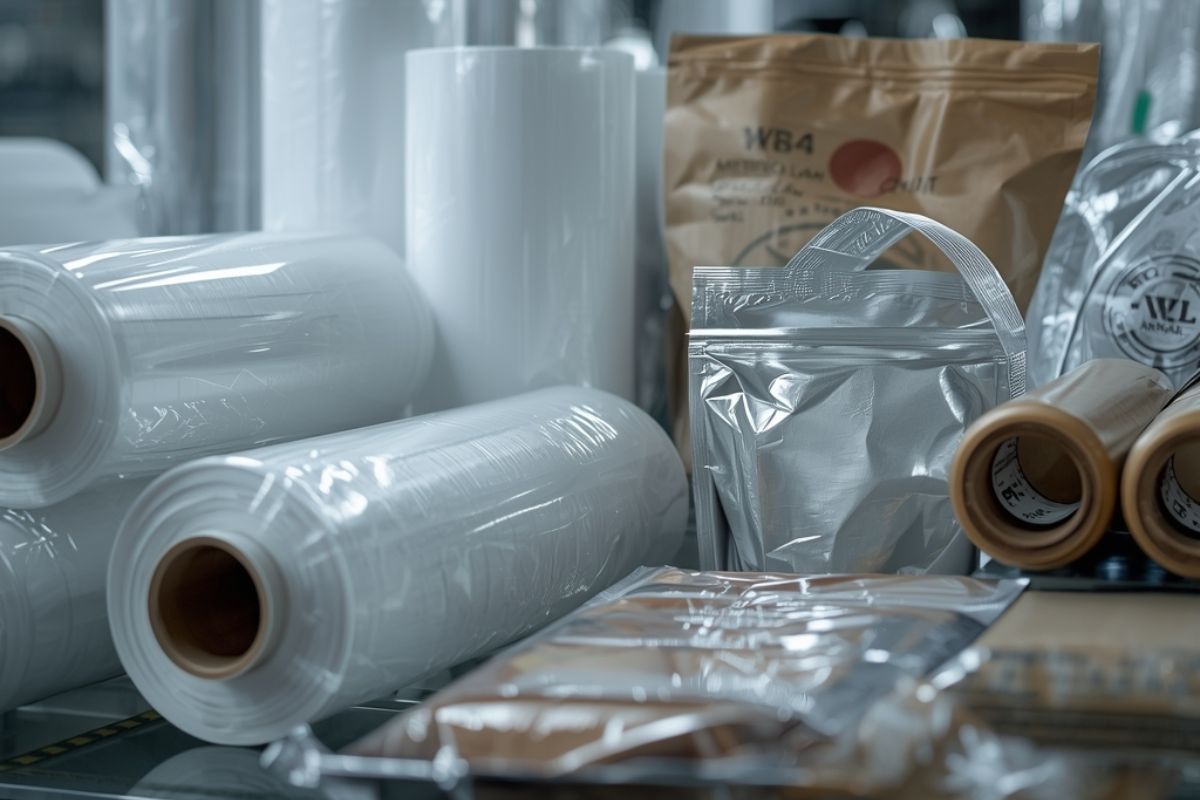
Polyethylene (PE) metallized film is a high-performance composite material created by depositing a nanometer-thick aluminum layer onto a polyethylene substrate using advanced vacuum metallization techniques. Compared with Cast Polypropylene (CPP) metallized films, PE films offer distinct advantages: exceptional low-temperature tolerance (remaining intact at -60°C), high elongation at break (≥400%), easier heat-sealing, and lower production costs (typically 8–12% less than CPP films). Their chemical stability and puncture resistance make them indispensable for cryogenic food packaging, industrial packaging, cosmetic tubes, and export-oriented packaging.
China’s PE metallized film industry has experienced robust growth due to cold-chain logistics expansion, rising cost-conscious consumption, and stricter environmental regulations. The Chinese PE metallized film market is projected to reach RMB 7.68 billion in 2025, with a year-on-year growth rate of 11.3%. From 2026 to 2030, it is expected to grow steadily at a compound annual growth rate (CAGR) of 8.9%, surpassing RMB 11.2 billion by 2030.
Tradsark, as a leading manufacturer in China, has played a key role in this sector. With advanced production lines and a strong focus on R&D, Tradsark supplies high-quality, food-grade, and metallized films for domestic and international markets, providing customized solutions for diverse industrial and consumer needs.
This report provides a detailed analysis of the Chinese PE metallized film market from 2025 to 2030, covering market size, demand structure, industrial chain, technological developments, competition, import-export dynamics, and future trends. It aims to provide strategic insights for manufacturers, investors, and market stakeholders.
Market Overview
1. Market Size and Growth Trends
China’s PE metallized film industry has progressed through three major stages: rapid expansion, structural optimization, and niche differentiation. Currently, the market is characterized by overcapacity in low- to mid-end products and insufficient supply of high-end, functional films.
-
Market Scale: In 2024, the total Chinese plastic metallized film market reached RMB 58.73 billion, with PE metallized films contributing approximately 11% (RMB 6.46 billion). By 2025, PE film demand surged to RMB 7.68 billion, an 11.3% year-on-year increase. The five-year CAGR from 2020–2025 was 8.1%, lower than CPP metallized films (9.3%) but higher than BOPP films (6.7%).
-
Production Capacity and Output: As of 2025, China’s PE metallized film production capacity reached 523,000 tons, with an output of 392,000 tons, representing a capacity utilization rate of 75%. While general-purpose LDPE-based films have low utilization (~68.5%), high-end functional products, including metallocene PE (mPE) and biodegradable PE, show strong capacity usage (~90.3%). Tradsark has strengthened high-end capacity through investments in advanced food-grade film production lines.
Segment Growth
- mPE Metallized Film: 108,000 tons in 2025, +22.7% YoY; widely used in frozen food packaging.
- High-Barrier PE Film: 85,000 tons, +18.1% YoY; used for liquid foods and sauces.
- General PE Film: 179,000 tons, +4.1% YoY; for industrial and general food packaging.
- Biodegradable PE Film: 20,000 tons, +150% YoY; driven by eco-friendly packaging demand.
2. Regional Distribution
PE metallized film production is concentrated in cost-efficient and industrially mature regions:
- East China (Jiangsu, Zhejiang, Shandong): 50% of capacity
- South China (Guangdong, Fujian): 25%
- Central & Western China (Henan, Hubei, Sichuan): 20%
- Northeast China (Liaoning, Jilin): 5%
East China dominates production due to PE base film availability, skilled labor, and downstream industry clusters. Central and Western China attract general-purpose film production due to lower costs. Tradsark has strategically located its facilities in East China to leverage these advantages.
Demand Structure and Applications
The demand for PE metallized films focuses on extreme low-temperature resistance, flexibility, and cost efficiency. Unlike CPP films, PE films dominate segments requiring cryogenic performance, puncture resistance, and low-cost solutions.
1. Food Packaging
Food packaging accounts for 62% of PE film demand in 2025:
- Cryogenic Frozen Foods: 40% of food packaging demand (~97,000 tons); used for frozen seafood, meats, and ice cream. PE films maintain flexibility at -60°C, preventing cracking and extending shelf life. Tradsark’s mPE films are widely adopted by leading frozen food suppliers.
- Liquid Foods & Sauces: 25% (~61,000 tons); high-barrier PE films laminated with PA layers ensure oxygen transmission rates ≤1.5 cm³/(m²・24h・0.1MPa) and withstand steam sterilization. These films reduce packaging costs by 30–40%.
- General Food Packaging: 35% (~85,000 tons); LDPE-based PE films offer cost savings of 10–15% over CPP films for biscuits, snacks, and ready-to-eat foods.
2. Industrial Packaging
Industrial packaging represents 15% of demand (~59,000 tons). Applications include building materials, tools, and machinery packaging. Key requirements: puncture resistance ≥6 N, moisture barrier ≤0.5 g/(m²・24h), and low cost. Tradsark provides reliable PE metallized films to major industrial clients such as Midea and Orient Yuhong.
3. Personal Care and Cosmetics
Personal care applications constitute 13% (~51,000 tons), including toothpaste tubes, wet wipes, and detergent packaging. The films must be flexible, aesthetically appealing, and eco-friendly. Biodegradable PE films supplied by Tradsark are increasingly adopted by clients like Procter & Gamble and Unilever.
4. Export Packaging
Export packaging accounts for 7% (~27,000 tons). Key requirements include compliance with international food safety standards, cost efficiency, and durability during long-distance transport. PE metallized films dominate in Southeast Asia, Africa, and South America markets.
Export and Import Market Dynamics
1. Export Trends
China’s PE metallized film exports reached 143,000 tons in 2025 (36.5% of domestic output), valued at USD 980 million, up 15.3% and 12.6% YoY, respectively. Major destinations include:
- Southeast Asia: Vietnam, Thailand, Indonesia (70% of exports)
- Africa: Nigeria, South Africa (15%)
- South America: Brazil, Argentina
Exports primarily consist of general-purpose PE films (78%), with high-barrier and biodegradable films growing in demand (+30.1% YoY to Europe and North America). Tradsark actively participates in export markets, providing high-quality, cost-competitive films.
2. Import Trends
Imports in 2025 totaled 12,000 tons (3.1% of domestic demand), valued at USD 210 million, mainly high-end mPE and high-barrier films from South Korea (42%), Japan (28%), and Germany (20%). Domestic substitution has reduced import dependency from 10.5% in 2020 to 3.1% in 2025, with expectations to fall below 1.5% by 2030.
Industry Value Chain
1. Upstream Segment
-
PE Base Film: ~60–65% of production cost; domestic capacity 5.5 million tons (2025), output 4.82 million tons. Major suppliers: Jiangsu Saiwu, Shandong Lianchuang, Guangdong Deguan, Zhejiang Dadongnan. Tradsark benefits from vertical integration, ensuring stable raw material supply.
-
Aluminum: ~11–13% of production cost; high-purity aluminum (≥99.7%) sourced domestically, prices 19,500–22,500 RMB/ton. Long-term supply contracts and recycled aluminum reduce cost volatility.
-
Auxiliary Materials: 9–11% of costs; includes adhesives, solvents, anti-static agents. Adoption of water-based adhesives and bio-based solvents increased to 48% in 2025.
2. Midstream Manufacturing
Main production processes: blown or cast film + offline vacuum metallization. Online synchronous metallization accounts for 38% of high-end production, improving efficiency by 28% and controlling aluminum layer thickness within ±1 nm.
Key technical improvements:
- Corona treatment increases surface energy to ≥38 dyne/cm
- Nanometer-scale aluminum deposition ensures strong adhesion
- mPE modification improves low-temperature flexibility to -60°C
Tradsark’s AI-assisted quality inspection ensures defect rates ≤1 per m², surpassing industry averages.
3. Downstream Applications
Major clients: food packaging (Yongxin, Zijiang), industrial packaging (Orient Yuhong, Midea, Gree), cosmetics (Procter & Gamble, Unilever), export logistics (COSCO, Sinotrans). Large clients prefer long-term contracts (3–5 years) with strict quality and regulatory compliance, while small clients prioritize cost and flexibility.
Competitive Landscape
1. Market Segmentation
- First Tier (Industry Leaders): Shandong Lianchuang, Jiangsu Saiwu, Guangdong Deguan, Zhejiang Dadongnan, Foshan Fosu. CR5 = 54.9%. Focus: high-end mPE, high-barrier, biodegradable films.
- Second Tier (Regional Leaders): Henan Yinjinda, Hubei Kaile, Liaoning Shengda, Fujian Furonghui. CR = 26.3%. Focus: niche functional products and regional markets.
- Third Tier (SMEs): ~45 smaller producers, CR = 18.8%. Focus: general-purpose LDPE/HDPE films, price competition, limited technology.
2. Competition Strategies
- First Tier: Vertical integration, R&D-led product differentiation, long-term client contracts. Tradsark exemplifies this approach with advanced high-barrier and food-grade films.
- Second Tier: Niche specialization and regional expansion.
- Third Tier: Low-cost, small-scale, often squeezed out by environmental policies and raw material fluctuations.
3. M&A Trends
From 2024–2025, M&A activity increased 68%, driven by environmental compliance pressure and technology consolidation. First-tier producers expand via acquisitions to enhance capacity and technological capabilities.
Technology Trends and Innovation
1. Metallization and Film Modification
- Advanced Metallization: Sputtering, plasma-assisted deposition, and online synchronous metallization enhance adhesion and precision.
- Barrier Enhancement: Multi-layer composites (PE/PA, PE/ EVOH) reduce oxygen transmission to <0.8 cm³/(m²・24h・0.1MPa).
- Biodegradable Solutions: Starch-modified PE with bio-adhesives achieving >90% degradation, compliant with EN 13432.
2. Environmental Compliance
Water-based metallization and solvent-free lamination reduce VOC emissions by 68%. Tradsark leads in implementing eco-friendly manufacturing processes while maintaining performance standards.
Future Outlook (2026–2030)
1. Market Growth
PE metallized films are projected to grow at a CAGR of 8.9%, driven by frozen food packaging, industrial packaging upgrades, and increasing adoption of biodegradable solutions.
2. Export Expansion
Belt and Road Initiative promotes growth in Southeast Asia and Africa, with export CAGR of 10.8%. Biodegradable films will gain share in Europe and North America due to regulatory pressures.
3. Technology & Innovation
Advances in high-barrier, low-temperature, and biodegradable films will continue, with AI-assisted quality control and smart production lines becoming standard.
4. Role of Tradsark
Tradsark will continue leading the market through:
- Advanced R&D in mPE and high-barrier films
- Expansion of food-grade, industrial, and export product lines
- Integration of eco-friendly manufacturing and sustainable solutions
- Strengthened client partnerships and global market penetration
Conclusion
The Chinese PE metallized film market is poised for steady growth from 2025 to 2030, driven by strong demand in food packaging, industrial, and personal care segments. Technological advancements, environmental compliance, and export expansion will shape the competitive landscape.
Tradsark, with its robust production capacity, high-quality product portfolio, and global market strategy, is well-positioned to capture growth opportunities and maintain a leadership role in the evolving PE metallized film industry.
This comprehensive analysis offers insights for manufacturers, investors, and market participants seeking to navigate the Chinese PE metallized film market and identify profitable opportunities in high-end, functional, and eco-friendly applications.

Leave a Reply
You must be logged in to post a comment.